
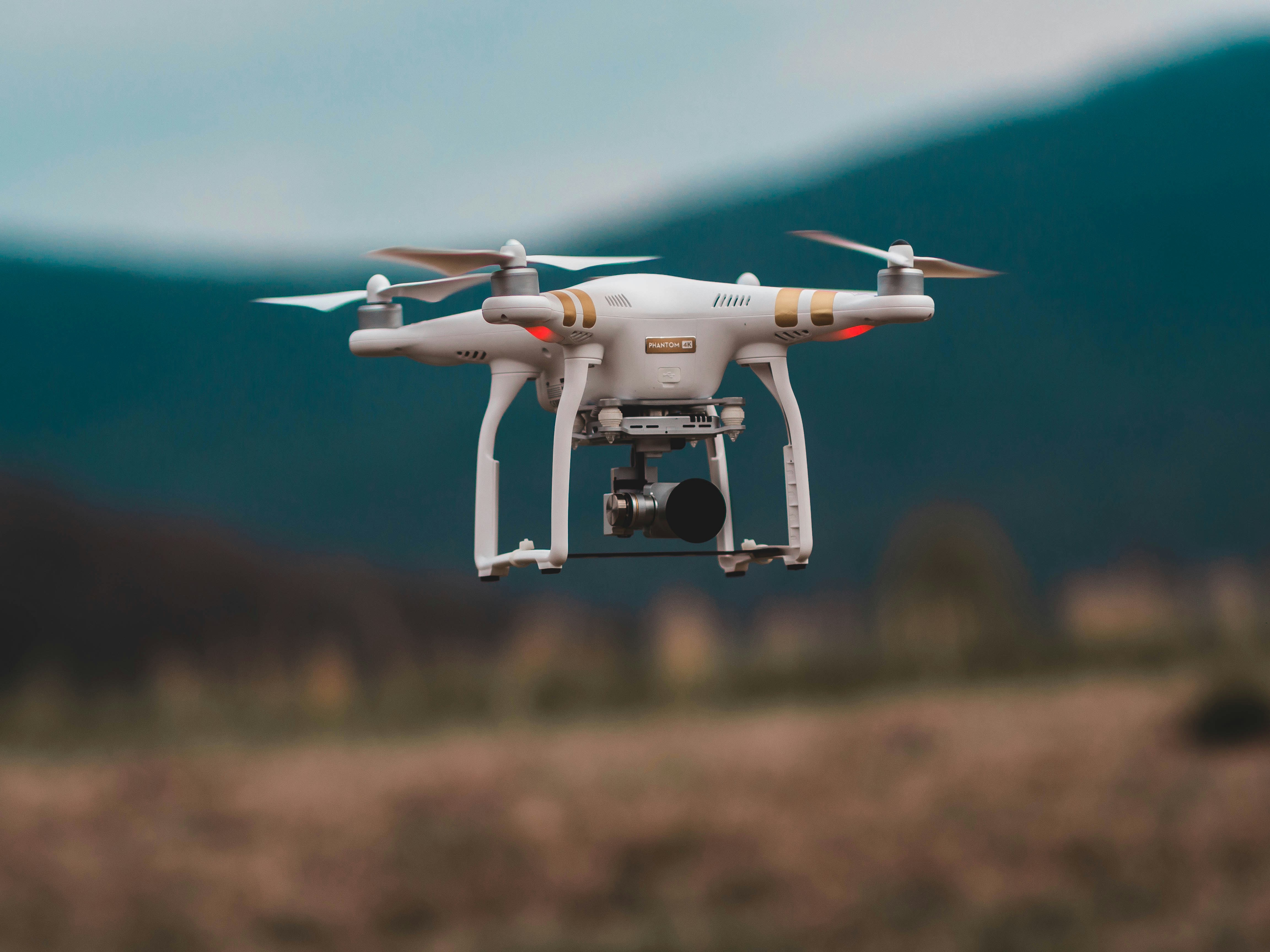
Aerial imagery has become almost expected in property marketing. A drone rises above a home, the camera pulls back, and suddenly the listing looks bigger and more cinematic. But a better question is often left out: What does the aerial shot actually help a buyer understand?
That question matters because height alone doesn’t make an image useful. Aerial drone photography earns its place when the view from above reveals something that would be difficult to understand from the ground. It might show how a home sits on a large parcel, where a property meets the water, or how an outdoor space connects to the rest of the site.
At Enlightened Pictures, we approach aerial work as part of the visual story rather than an automatic add-on. Our drone services include aerial photography and videography for real estate and commercial projects, with location scouting and post-production built into our broader production capabilities.
Start With the Question, Not the Drone
Before planning an aerial shot, ask what a prospective buyer might still be unable to see.
A ground-level gallery can show the kitchen, facade, pool, landscaping and individual rooms. It becomes harder to communicate the relationship between those elements and the surrounding property.
That’s where aerial drone photography can become useful. A single frame may help someone understand:
- How much land surrounds the building
- Where the driveway or access road leads
- How outdoor areas connect
- Whether a property borders water or open space
- How the building sits within its neighborhood
- The relationship between multiple structures on one site
The point isn’t to show everything from above. It’s to answer a visual question efficiently.
Some Properties Have More to Say From Above
Consider a large estate. From the driveway, the viewer may see an impressive house, but not the full grounds. Aerial imagery can reveal the relationship between the home, pool, gardens, guest structures, driveway and surrounding landscape.
The same principle applies to waterfront homes, ranches, development sites, commercial properties and locations with unusual layouts. In these cases, the land itself is part of what someone is evaluating.
A smaller property can be different. If the building fills most of its lot and the surrounding area adds little to the marketing story, an aerial image may simply show another roof surrounded by other roofs. That’s not necessarily a problem with the drone. It’s a sign that the property may not have a strong aerial story.
The Best Aerial Shot May Not Be the Most Dramatic One
There is a temptation to fly higher, pull farther back, or create a sweeping reveal because those movements look impressive. But impressive and informative aren’t always the same thing.
A lower, carefully framed view might explain the relationship between a house and its backyard better than a very high overhead shot. A slow movement along a waterfront might communicate access and setting more clearly than a fast orbit. For a commercial site, an image showing entrances, parking, surrounding roads and nearby structures could be more useful than a dramatic skyline view.
Good aerial drone photography starts with composition but it also depends on judgment. The camera needs to be in the place where the property makes the most sense.
When More Visual Information Can Actually Hurt
More imagery isn’t automatically better marketing. An aerial perspective can reveal busy roads, neighboring buildings, unfinished areas, utility infrastructure, or a setting that doesn’t match the impression created by carefully selected ground-level images. Those details aren’t necessarily reasons to avoid aerial photography. They are reasons to think carefully about what the image communicates.
A useful marketing image should help the viewer form a clearer picture of the property. If a shot creates confusion or adds visual clutter without answering an important question, it may not deserve a place in the final gallery.
That kind of restraint is especially valuable when the marketing budget is limited. If the interiors, staging, architecture, or ground-level setting carry most of the property’s appeal, those areas may deserve more attention before adding another camera angle.
Think of the Aerial as a Missing Piece
A strong property gallery has different jobs for different images.
| Ground-level imagery | Aerial imagery |
| Shows finishes and details | Shows relationships and context |
| Communicates room scale | Communicates site scale |
| Highlights architecture up close | Shows how the building sits within its surroundings |
| Captures outdoor details | Shows the full outdoor layout |
| Creates an intimate sense of place | Gives a wider understanding of location |
The two aren’t competing formats. They answer different questions.
At Enlightened Pictures, we can combine aerial and ground-level visuals when the project calls for both. Our broader production work includes high-production-value cinematography and aerial drone cinematography, allowing the perspective to serve the story rather than dictate it.
A Simple Test Before Booking the Shoot
Ask one question: “What will the viewer understand after seeing this aerial image that they couldn’t understand before?”
If the answer is clear, the drone may be worth bringing into the production.
If the answer is simply, “It will make the listing look more impressive,” take another look at the property and the marketing goal.
That doesn’t mean aerial drone photography should be reserved only for huge estates or waterfront homes. A compact property can benefit when its location, architecture, rooftop, courtyard, access or surroundings are difficult to explain from the ground. The deciding factor is not size. It’s whether elevation adds useful information.
Final Thought
The strongest aerial imagery doesn’t feel added for the sake of having a drone shot. It feels like the missing view the viewer needed.
That’s the standard we aim for at Enlightened Pictures. We plan aerial visuals around the location, the message and what the audience needs to see, rather than treating every property as if it requires the same collection of shots. Our drone services are available for real estate and commercial projects, supported by an experienced creative production team.
Before adding aerial drone photography to a property campaign, look at the story from ground level first. Then ask what isn’t being shown. If the answer lives above the roofline, an aerial perspective can do real marketing work. If it doesn’t, leaving the drone on the ground may be the smarter creative decision.